In my last post we looked at the story of Moses and the Israelites near Kadesh Barnea when the people grumbled to Moses because they had no water. The Lord told him to speak to the rock that was there and it would release its water to satisfy their thirst. Moses got angry and struck the rock instead. His disobedience cost him entry into the promised land. In this current lesson I want to look at the consequences of disobedience when we allow sin to linger in our lives for just one more day.
One would have thought that after the punishment I received as a sophomore in high school for being disobedient to my parents that I would, henceforth, have lived an exemplary, compliant life. Would that I could report to you that was true, but such was not the case. Once I acquired my driver’s license a whole new world opened to me. With new privileges came new opportunities for adventure and I tested the limits quite often. While the grounding I received the year before changed my behavior for a time, it did not change my heart. My sin nature still lived within. I still got into trouble. One of the hardest for me was getting home on time. Try as I might, I regularly blew curfew.
Turning to the Scriptures we find the story of king Saul given a command from God through the prophet Samuel to rid the land of the Amalekites.
“Samuel said to Saul, ‘…listen to what God says. I am about to get even with Amalek for ambushing Israel when Israel came up out of Egypt. Here’s what you are to do: Go to war against Amalek, Put everything connected with Amalek under a holy ban. And no exceptions! This is to be total destruction…the works!’” (I Samuel 15:1-3 MSG)
The text continues, “Then Saul went after Amalek. He captured Agag, king of Amalek, alive. Everyone else was killed under the terms of the holy ban. Saul and the army made an exception for Agag, and for the choice sheep and cattle.” There it is – total destruction, except for….
God spoke to Samuel and told him He was sorry that He ever made Saul king. God tells Samuel, “He has turned his back on me. He refuses to do what I tell him.” (I Sam. 15:11 MSG)
Samuel went the next day to find Saul. When Saul sees him coming, he calls out to Samuel, “God’s blessings on you! I accomplished God’s plan to the letter!” On top of his disobedience, Saul now lies to Samuel! And Samuel says, “What then is this bleating of the sheep in my ears and the lowing of the oxen that I hear? “Oh, yeah, that. It’s from the Amalekites. The people spared the best of…to sacrifice to the Lord your God.” By referring to God as “your God” Saul begins to distance himself from Samuel and God. That is what sin does. It breaks the relationship with our Heavenly Father. When we get cozy with evil the Lord does not listen to us says the psalmist. (Psalm 66:18 MSG)
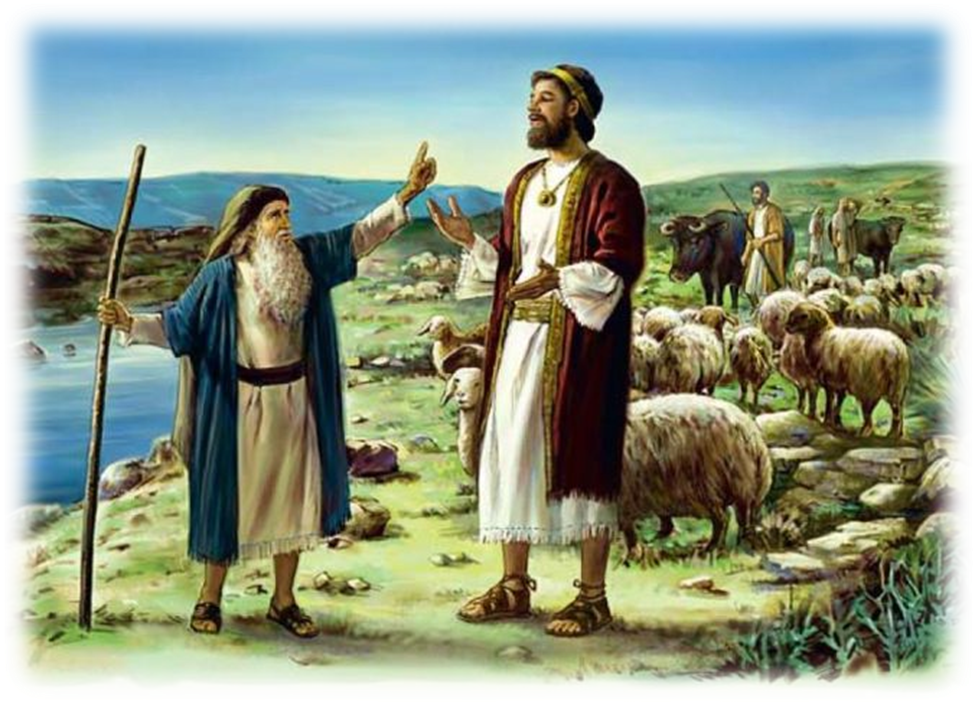
The consequences of Saul’s disobedience reached down many generations later. By allowing Agag to live Saul kicks the can down the road approximately 650 years to a man named Mordecai. Ever hear of him? He was the cousin of Queen Esther and the man who encouraged her to intercede on behalf of the Jews to save them from annihilation at the hands of one, Haman, the Agagite (Esther 3;1). And what is an Agagite? A descendant of Agag. The generations-long feud continues. We read in 1 Samuel 30 that David also had trouble with the Amalekites. If you go back further, you will discover that the Amalekites were descendants of Esau – always picking a fight with Israel! (Genesis 36:12)
All of King Ahasuerus’ servants who were at the king’s gate bowed down to Haman and paid homage to him – except Mordecai. (Esther 3:1-2) Though we don’t know for sure, Haman quite possibly was a descendant of king Agag. If the association is correct, one can easily understand Mordecai’s disrespect for him. Mordecai was a Jew of the tribe of Benjamin the son of Jair, the son of Shimei, the son of Kish – an ancestor of Saul. The animosity between the Amalekites and the Jews was long standing as I mentioned. Mordecai was not about to pay homage to Haman! Saul did not carry out God’s command to wipe out the Amalekites completely and generations later his sin nearly wiped out his own people. Here we see the consequences of letting sin linger.
Several years ago, I was introduced to the writings of John Owen. John Owen was an English theologian, pastor, author and academic at the University of Oxford in the 17th century. Much of what he wrote is still in print today. One of his noted works is Of the Mortification of Sin in Believers. Using Romans 8:13 as the foundation for his thesis he states this:
“He that is appointed to kill an enemy,
If he leave striking before the other ceases living,
Does but half his work.”
Saul left after doing only half his work.
May we heed another warning from John Owen:
“Do you mortify;
Do you make it your daily work;
Be always at it while you live;
Cease not a day from this work;
Be killing sin or it will be killing you.”
Bill Erickson
 Devotional Blog