The other day my teen-aged granddaughter asked me if I could take her to her friend’s house in the next town over from ours.
I said, “Sure, do you know how to get there?”
“No, but I have her address and you can enter it in your GPS.”
“I’ve never used my GPS, I responded.” She rolled her eyes and said, “Okay, I’ll set it up.”
After a few quick keystrokes on the dash screen, she had it set, and we were off.
The least used accessory on my car is the GPS/Navigation system. I know we are years into the twenty-first century, but I still do not use the GPS system in my car. Maps are my preferred documents of navigation. I don’t need to hear a lilting robotic voice telling me to “turn around,” if I pass the pre-determined turn followed by a perturbed, “Recalculating!” How ridiculous! Also, I’ve always preferred to follow the “blue highways” on a map. I choose the old roads. When I’ve travelled my last mile my epitaph will read, “He walked with God along the back roads.”
Perhaps it is because I am now in my sunset years, but every now and then I bristle a little when I hear someone (mostly my children) say, “You’re just old… it’s just not that way anymore…those days are long gone…maybe back in your day, but this is today.” Hello… I’m still here. Isn’t today “my day” also? We somehow have developed an aversion to anything old or getting old. George Burns (I know, “Who is that?”) immortalized the lament of Sonny Throckmorton (again, “Who is that?”) in wishing for days long past when he sings “I Wish I Was Eighteen Again.”
Theologian J.I. Packer described it as the false assumption that “the newer is the truer, only what is recent is decent, every shift of ground is a step forward, and every latest word must be hailed as the last word on its subject.”
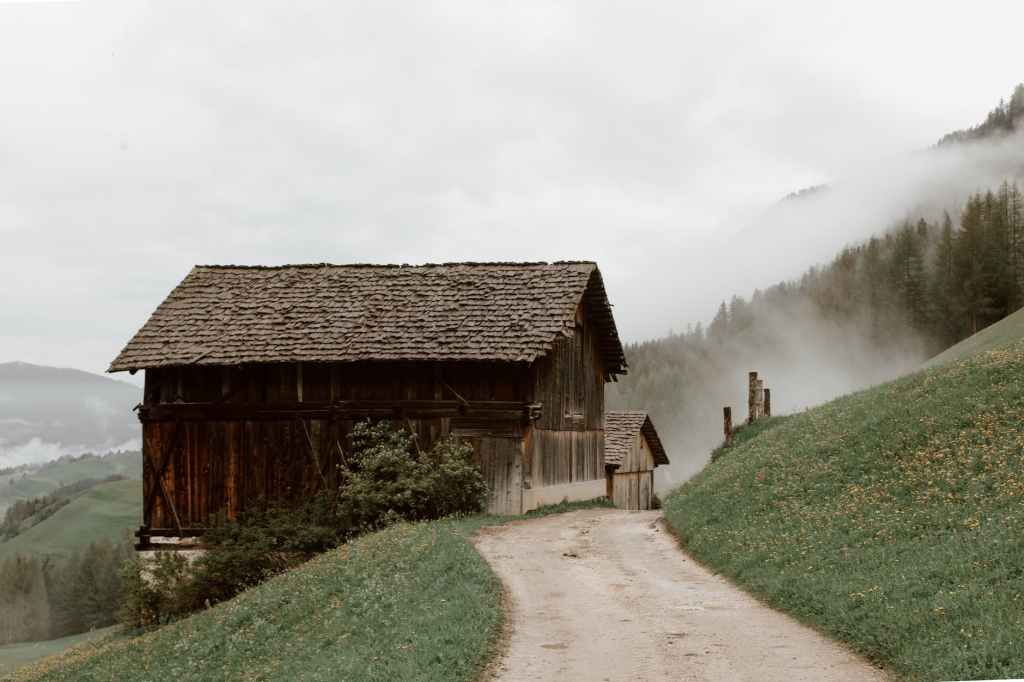
The prophet Jeremiah had a different word for the people of Israel. In chapter 6, verse 16 he says, “Stand by the ways and see and ask for the ancient paths, where the good way is, and walk in it; and you will find rest for your souls.’” He was telling the people of Israel to ask for directions to the old road – wherein is the good way. Walk the old road and you will find rest for your souls.
What is this ancient path? Where does it lead?
The ancient path – the tried-and-true road – would lead the Israelites back to God. It is the path of blessing spelled out in the old Mosaic Covenant. We have it today in Deuteronomy 28. A long passage but well worth studying. It is important to understand that the Mosaic Covenant differs significantly from other biblical covenants because it is conditional. The blessings God promises are directly related to Israel’s obedience to the Mosaic Law. If Israel is obedient, then God will bless them, but if they disobey, God will punish them. Sounds simple enough. “If you do this, then I will do this,” says the Lord.
What’s the benefit of following the old road?
“If you listen obediently to the Voice of God, your God, and heartily obey all his commandments that I command you today, God, your God, will place you on high, high above all the nations of the world. All these blessings will come down on you and spread out beyond you because you have responded to the Voice of God, your God:
God’s Blessing…
…inside the city,
…in the country,
…on your children,
…the crops of your land,
… the young of your livestock,
…the calves of your herds,
…the lambs of your flocks.
God’s blessing on your basket and bread bowl,
God’s blessing in your coming in,
God’s blessing in your going out.” (Deut. 28:1-6 MSG)
Secondly, we will find rest for our souls. Jesus tells us in Matthew’s gospel to “Come to me, all who labor and are heavy laden, and I will give you rest. Take my yoke upon you and learn of me, for I am gentle and lowly in heart, and you will find rest for your souls.” (11:28-29)
“Come away by yourselves to a desolate place and rest awhile.” says Mark in his gospel.
In Exodus chapter 33, verse 14 the Lord reminds Moses that His presence will go with him, and He will give him rest.
It was French mathematician and physicist Blaise Pascal who said that “All men’s miseries derive from not being able to sit in a quiet room alone.” We need those times of quiet rest. If we but follow Jesus and learn of Him, we will find rest. His yoke is easy, but it is still a yoke — we must be obedient.
Unfortunately, Israel did not listen. The last sentence of the verse in Jeremiah says, “But they said, ‘We will not walk in it!’” They chose instead to continue in their rebellion and follow the path that led to their judgment and destruction.
Do you find yourself at a crossroads today? Are you looking for the good road – the tried-and-true road? Your life today may not be easy, but I urge you, my Friend, to find the ancient path – the tried-and-true road – that leads to the Saviour.
Life is difficult. Most days are hard for many of us. But God calls us to be faithful. At the end of Brennan Manning’s book, The Ragamuffin Gospel, he says this: “On that last day, when we arrive at the Great Cabin in the Sky, many of us will be bloodied, battered, bruised and limping. But by God and by Christ, there will be a light in the window and a ‘Welcome Home’ sign above the door.” Choose the good road.
Bill Erickson
 Devotional Blog
2 responses to “Ancient Paths”
Beautifully said Bill.
LikeLike
Beautifully said Bill.
LikeLike